

Matrix Software Development Company in Bangalore: Blending Structure, Collaboration, and Innovation
Bangalore — often referred to as the Silicon Valley of India — is home to one of the most dynamic software development ecosystems in the world. With a dense concentration of startups, global technology companies, research institutions, and talent from across the country, Bangalore has cultivated practices and project models that support rapid innovation at scale. A key organizational approach gaining prominence in this environment is the matrix software development model, a framework that blends functional expertise with cross-disciplinary collaboration to build complex software systems.
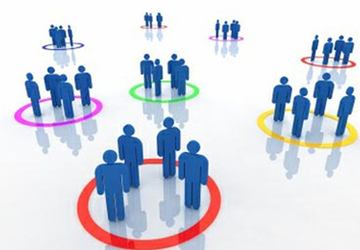
At its core, a matrix organizational structure aims to break down silos. Instead of organizing teams strictly by function — for example, all developers in one group, all testers in another, all designers in a third — matrix structures assign people to multiple dimensions of responsibility. An individual might report to both a functional manager (who oversees technical growth or discipline expertise) and a project or product manager (who drives delivery goals and customer priorities). This dual reporting may sound complex, but it is especially suited to software development where diverse skills must converge on shared outcomes.
In Bangalore’s software landscape, matrix structures are increasingly relevant. Companies ranging from multinational corporations to rapidly scaling startups use this model to manage cross-functional product development. The city’s vast talent pool makes it possible to staff teams with specialists — from backend engineers to data scientists and UX designers — who can be shared across initiatives without the rigidity of traditional siloed reporting.
Advantages of Matrix Software Development Services in Bangalore
1. Resource Flexibility and Optimization:Bangalore’s IT industry faces rapid shifts in project demand — new client requirements, emerging technologies, and evolving product roadmaps. Matrix structures allow companies to allocate talent dynamically, moving skilled individuals between projects without sacrificing accountability or continuity.
2. Enhanced Collaboration:
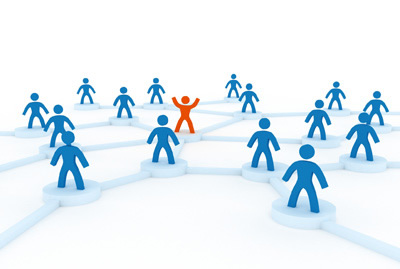
When developers, QA engineers, DevOps specialists, and designers are embedded into cross-functional teams, communication improves. This is especially important in Agile and DevOps cultures, which are widespread across Bangalore’s tech firms. Matrix models support these ways of working by formalizing cross-team linkages.
3. Professional Growth and Knowledge Transfer:
Functional managers in a matrix organization focus on depth — nurturing technical competence and career progression — while project managers facilitate breadth — exposing team members to diverse problems and domains. For Bangalore’s workforce, this dual focus can accelerate skill development and leadership readiness.
4. Scalability for Complex Projects:
Many Bangalore companies build enterprise-grade software — whether for fintech, cloud services, e-commerce platforms, or telecom systems. Such systems often require tight coordination across multiple domains (security, scalability, UI/UX, data integrity). Matrix setups help manage this complexity without sacrificing agility.
Challenges and Cultural Nuances
Matrix organizations also face challenges. Dual reporting lines can create ambiguity: who has the final say on performance evaluation, task priority, or resource shifts? In Bangalore, where work cultures vary from hierarchical multinational practices to flat startup environments, aligning expectations is crucial.Successful matrix teams in Bangalore often emphasize clear communication rituals such as daily standups, transparent backlog ownership, and shared OKRs (Objectives and Key Results). They invest in collaboration tools — from Jira and Confluence to Slack and Miro — to ensure asynchronous coordination across teams and time zones.
Another challenge is the potential overload on developers pulled in multiple directions. To mitigate this, many Bangalore tech leaders adopt workload visualization techniques, capacity planning, and frequent retrospectives. These approaches help teams reflect on what’s working, reduce friction, and prevent burnout.
Matrix Thinking Beyond Structure
It’s important to note that adopting a matrix isn’t just about org charts — it’s about mindset. Matrix software development encourages perspective beyond one’s immediate task or team. Engineers learn to see products from business, customer, and operational angles. Product leaders appreciate technical constraints. Designers incorporate engineering realities into experiences.In Bangalore, where competition for digital talent is intense and innovation cycles are compressed, this broader awareness can be a differentiator. Companies that effectively practice matrix collaboration often find they deliver higher-quality products with greater alignment to market needs.

Looking Forward
As Bangalore continues to evolve — with advances in AI, cloud computing, cybersecurity, and distributed systems — the matrix model will likely adapt too. Hybrid and remote work, global delivery centers, and cross-border teams add new layers to how matrix development functions. Yet, the underlying principle remains: empower multidisciplinary collaboration without losing depth of expertise.
For software professionals in Bangalore, mastery of matrix dynamics is becoming a valuable competency — one that fosters flexibility, innovation, and resilience in an ever-changing industry.


